


Let's Talk
We'd love to hear about your project. Book a time that works for you and we'll take care of the rest.
- Commercial projects
- Education & institutions
- Partnerships & resellers
- General inquiries
We'd love to hear about your project. Book a time that works for you and we'll take care of the rest.

Contents
Believe it or not, you can easily grow produce in Canada in the winter. How, you wonder? Well, it’s as simple as moving your operation indoors into a hydroponic container farm, growing rack, or custom indoor farm. These systems use LED lighting, climate control, and a closed water loop to grow fresh greens in any weather. For example, one 320 square foot container farm using Just Vertical technology can yield up to 1,425 lbs of lettuce a month (that’s literally almost a ton of lettuce). That holds true even in a northern January.
Therefore, the end of the outdoor season no longer means the end of your program, your supply, or your revenue.
We wrote this guide for people who already grow (no matter how small). Maybe you run a summer garden program at a school, a long-term care home, or a community organization. Maybe you operate a seasonal farm business that goes quiet from October to May. However, every fall you watch your harvest disappear under the snow, and every winter you buy back the same produce at import prices.
We think that cycle is a choice, not a fact of Canadian life. At Just Vertical, we build and consult on large-scale indoor farms, so we see institutions break this cycle every year. In this post, we will walk through the five reasons organizations invest in winter indoor growing. They keep programs running, fight food insecurity, drive consistent revenue, supply buyers year-round, and augment existing services. In addition, we will share real numbers from our own research and deployments. By the end, you will know what it takes to grow produce in Canada in the winter, and whether it fits your organization.
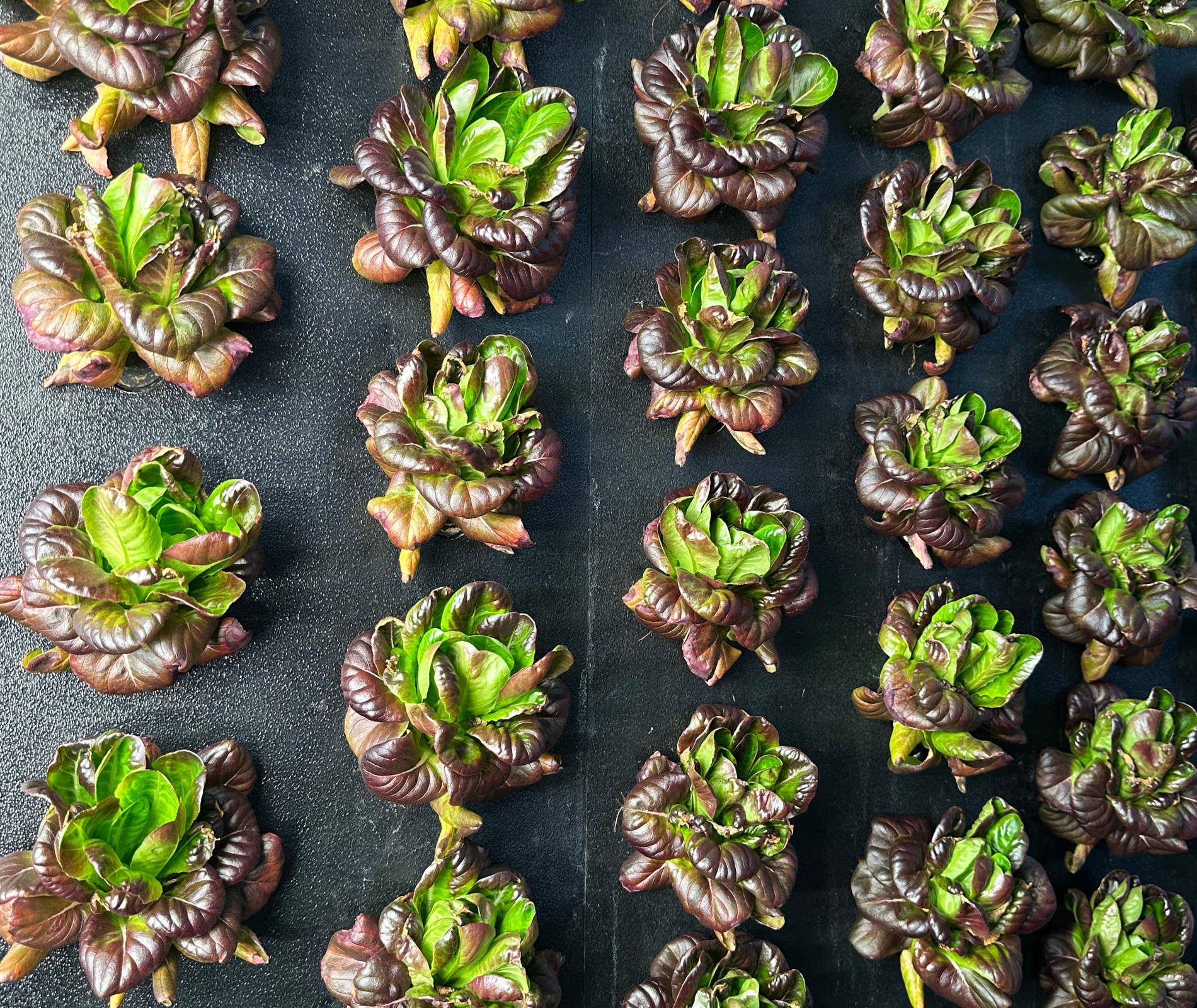
Winter shuts down most growing programs because outdoor growing ends. To add to that, imported replacements are often costly and unreliable. Once the frost hits, a summer garden or seasonal farm has nothing left to harvest. As a result, organizations that grew their own food in July become import customers by November, a seasonal supply gap documented by the USDA Economic Research Service.
That dependence is expensive. In 2024, Canada imported $4.1 billion worth of field vegetables, according to Statistics Canada data compiled by Agriculture and Agri-Food Canada. Lettuce alone accounted for $682.4 million of that. In other words, we ship in the exact crops that indoor systems grow best.
Meanwhile, prices keep climbing. Canada’s Food Price Report 2026 forecasts food prices will rise 4% to 6% this year. That adds up to $994.63 more for the average family of four. Moreover, the same report notes food prices are 27% higher than five years ago.
Therefore, the real question is whether you accept that disruption every fall or design around it.
Yes, you can grow produce in Canada in the winter, and you can do it in any province or territory. Indoor hydroponic systems remove weather from the equation entirely. Think of an indoor farm as a sealed climate you control. Consequently, the snow outside becomes irrelevant, like rain outside a swimming pool.
Winter indoor growing systems come in three main formats, and each suits a different scale:
In every format, LED lights replace the sun, a closed water loop replaces rain, and climate controls replace the seasons. Therefore, harvests repeat on a fixed weekly schedule all year.
You can explore the full range of systems on our commercial indoor farming homepage.
Winter indoor growing keeps programs running because the activity itself never has to stop. A garden program usually delivers more than food; it delivers routine, purpose, education, and social connection. However, when the garden dies back in the fall, those benefits die back with it.
The stakes are highest in long-term care. In a UNBC/CTAAN study conducted in collaboration with Just Vertical farms, 1 in 5 long-term care residents experience depression, and fewer than 10% show high social engagement in activities. Gardening programs directly address both, because they give residents a living thing to tend and a shared task to gather around. Consequently, a five-month shutdown removes that benefit exactly when residents are most isolated indoors.
An indoor system turns a seasonal program into a permanent one. For example:
In short, winter farming protects the program you already built, rather than forcing you to start something new.
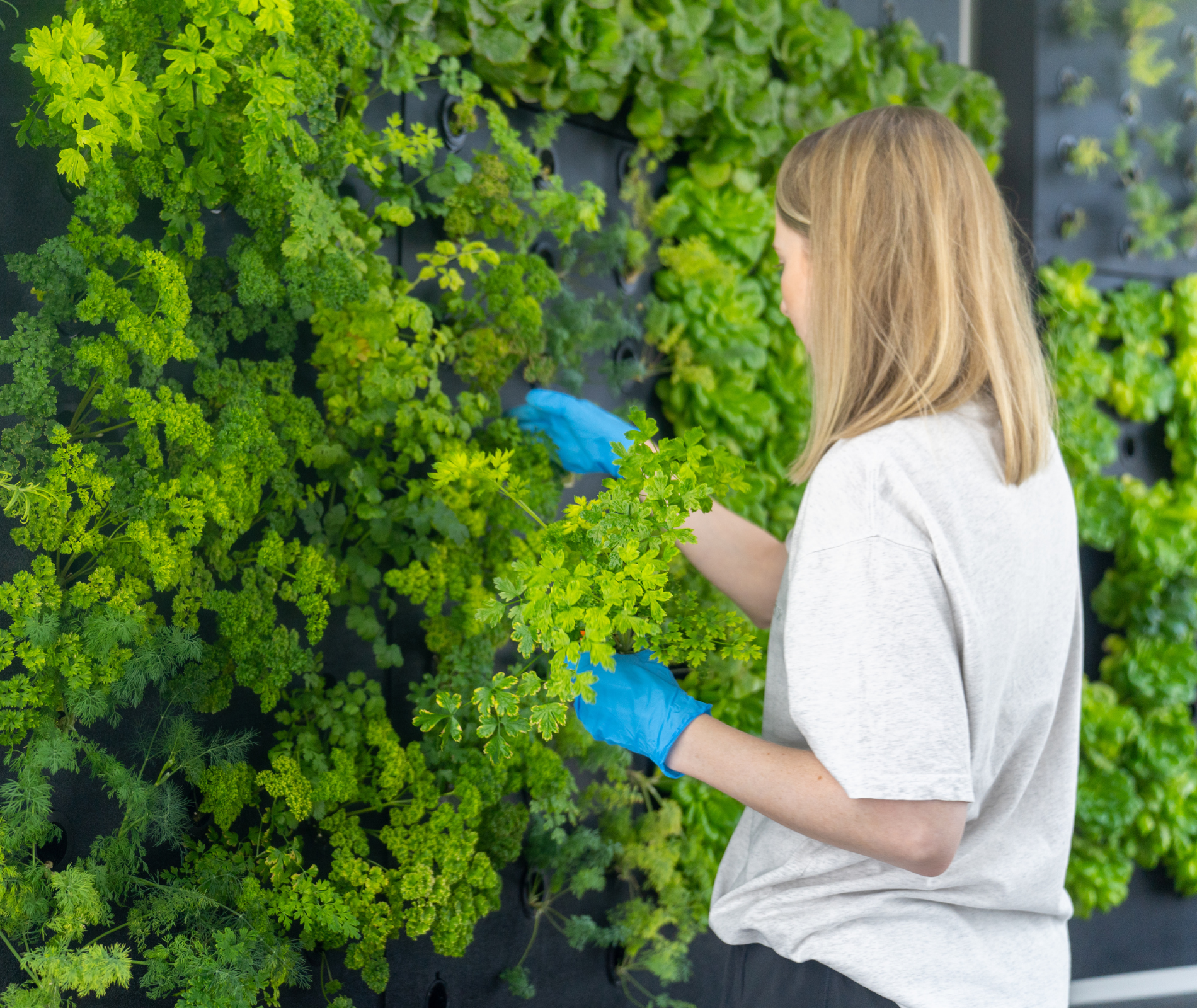
Winter farming helps alleviate food insecurity by producing fresh food in the exact months when access is worst. This matters most in northern and rural communities, where supply chains are longest and prices are highest. For example, 46.1% of people in Nunavut lived in food-insecure households in 2022, according to Statistics Canada territorial estimates reported by PROOF.
Our first-party research makes the gap concrete. In a UNBC/CTAAN study in northern BC, 82% of facility staff surveyed said fresh produce is not readily available to their facilities. However, 73% of the same group said fresh produce was available to them personally. That gap between personal and institutional access is the whole problem in one number. Suppliers limit deliveries, shortages hit, and costs climb beyond institutional budgets.
Participants also flagged that access gets worse in winter specifically, citing low variety, poor quality, and prohibitive costs. One participant described lettuce in the north as “so expensive and … poor quality.”
The national backdrop is worse. According to Statistics Canada data reported by PROOF, 9.8 million Canadians lived in food-insecure households in 2025, including 2.4 million children. Consequently, an institution that grows produce in Canada in the winter puts fresh food directly into that gap.
Yes, an indoor farm can drive revenue right through the winter, because production never dips. A seasonal grower earns for five or six months and then goes quiet. By contrast, a 320 square foot container farm using Just Vertical technology yields up to 1,425 lbs of lettuce a month. January performs as reliably as July. Therefore, your revenue stream becomes a flat line instead of a summer spike.
Winter production keeps revenue consistent because you sell into the season when supply is scarcest and prices are highest. Consider the paths a year-round grower can stack:
Buyers value produce supply in the winter because their alternatives are imports with long, fragile supply chains. Canada’s field vegetable trade deficit reached $2.98 billion in 2025. As a result, a chef or grocer buying local lettuce in February gains freshness, shelf life, and a local story. Meanwhile, the grower who can promise that supply holds the contract.
See one of our container farms producing through the cold season here:
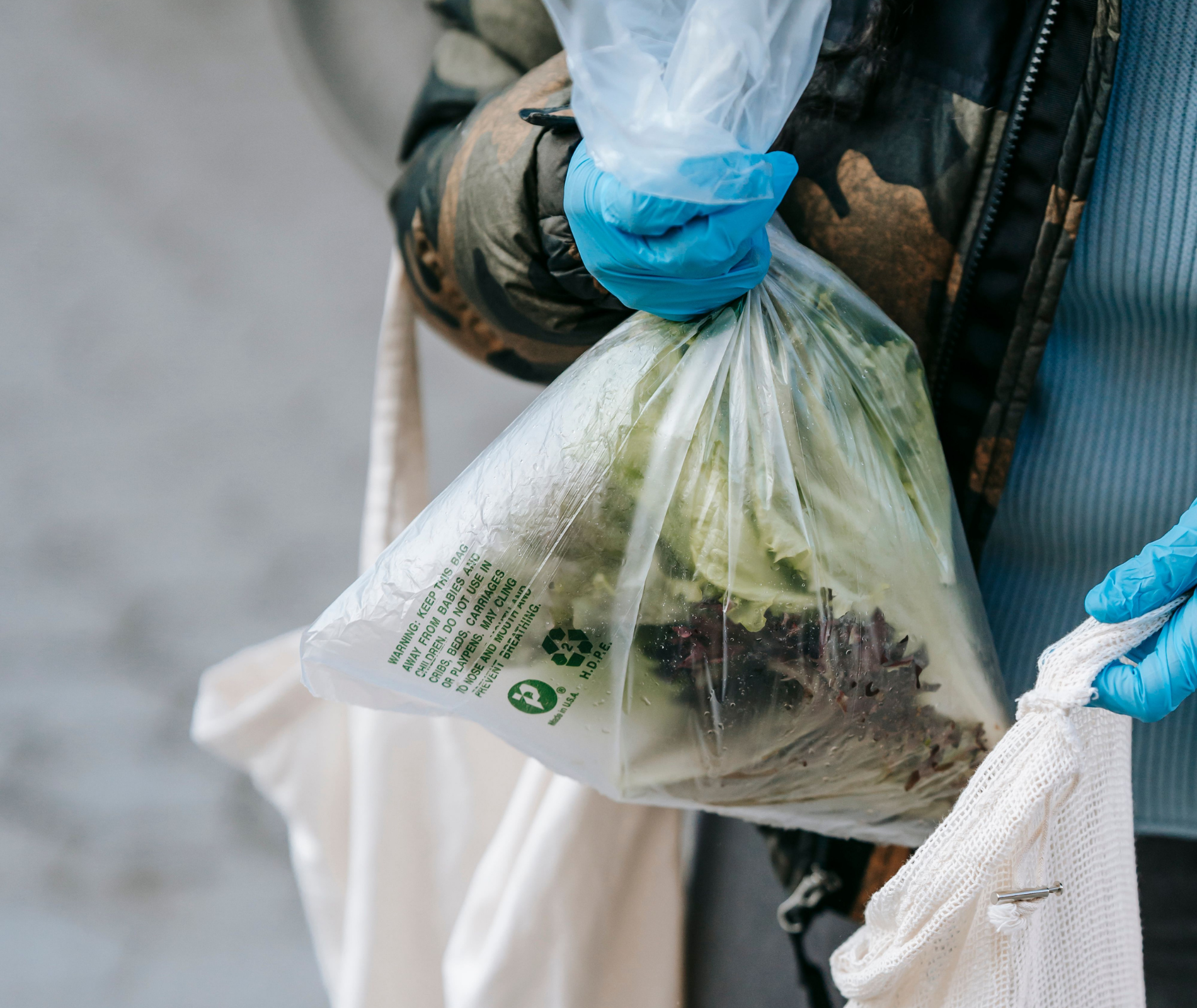
A winter indoor farm augments the services you already deliver by adding fresh food, activity, and therapeutic programming to them. In other words, the farm strengthens the mission you already have.
Healthcare shows the scale of the opportunity. Hospice palliative care programs in northern and rural BC serve roughly 10,000 clients a month. Every one of those clients receives meals, activities, and care that an on-site farm can improve. Similarly, schools fold the farm into science and nutrition curriculum, while community organizations fold it into skills training and employment programs.
For example, staff in our UNBC/CTAAN workshops ranked these as the top strengths of indoor systems:
Consequently, the same unit that feeds your kitchen also becomes a recreation therapy tool, a teaching lab, or a training site.

Yes. Indoor hydroponic farms grow lettuce year-round in every Canadian province and territory, because LED lighting and climate control replace the outdoor season. For example, a 320 square foot container farm using Just Vertical technology yields up to 1,425 lbs of lettuce monthly. Output stays constant through January, February, and March, regardless of the weather outside.
They move the program indoors. Growing towers and racks fit inside cafeterias, classrooms, and activity rooms, so planting and harvesting continue after frost. Container farms sit outside the building and run all year. As a result, students, residents, and volunteers keep the same routines through winter instead of restarting the program every spring.
Yes, and healthcare staff specifically flagged this as a strength. In our UNBC/CTAAN workshops, participants ranked the low infection risk of the closed water system among the top benefits of indoor growing. Because water recirculates in a sealed loop and no soil enters the building, the system suits environments with strict infection control standards.
You need less space than most people expect. A growing tower or rack occupies a few square feet inside an existing room. A full container farm needs a 320 square foot footprint, roughly two parking spaces, plus power and water hookups. Small space requirements ranked among the top strengths named by facility staff in our UNBC/CTAAN research.
For most institutions, yes, because winter is when purchased produce costs the most. Canada’s Food Price Report 2026 forecasts food prices rising 4% to 6% this year. Meanwhile, one container farm produces up to 1,425 lbs of lettuce monthly. Growing through winter replaces your most expensive purchases with your cheapest production.
Start by matching a system to the program or business you already run, because the right format depends on your goal. We recommend a simple sequence:
Above all, do not let another fall end another season. You already proved the value of growing in the summer, and an indoor system refuses to hand that value back every winter. You might want to keep your programming going, or you might want to run a profitable enterprise through the cold months. Either way, you can grow produce in Canada in the winter, starting this one.
In conclusion, winter farming is no longer an experiment in this country. It is a working model with named yields, ranked strengths, and institutions already running it. When you are ready, explore our commercial indoor farms and talk to our team about your site.
Would you rather we reach out to you? Fill out the form to have a member of our team to reach out and discuss your growing goals.


