


Let's Talk
We'd love to hear about your project. Book a time that works for you and we'll take care of the rest.
- Commercial projects
- Education & institutions
- Partnerships & resellers
- General inquiries
We'd love to hear about your project. Book a time that works for you and we'll take care of the rest.

Contents
Light recipes for plant flavor answer a question we get from growers, chefs, and buyers constantly. How does light affect the flavor of hydroponic plants? The short answer is that the light spectrum controls the chemical compounds inside a plant that our tongues and noses read as flavor. Change the spectrum, and you change the compound, and the flavor moves with it.
In a field, flavor is dependent on what the weather gives you. Soil chemistry shifts, rainfall varies, and a hot week versus a cool week can change how a crop tastes from one harvest to the next. Indoors, we remove that randomness. We choose the wavelength, the intensity, and the timing, so flavor stops becomes an input we design around.
That shift matters most for buyers who need the same product every single time. A chef who orders a peppery microgreen in March expects that same bite in August. A hydroponic system that runs on a fixed light recipe can deliver that, because the plant is responding to the same signal every cycle, regardless of the season.
This comes down to plant biology, and we can walk through exactly how it works, section by section, so you leave with the mechanism, not just the summary.
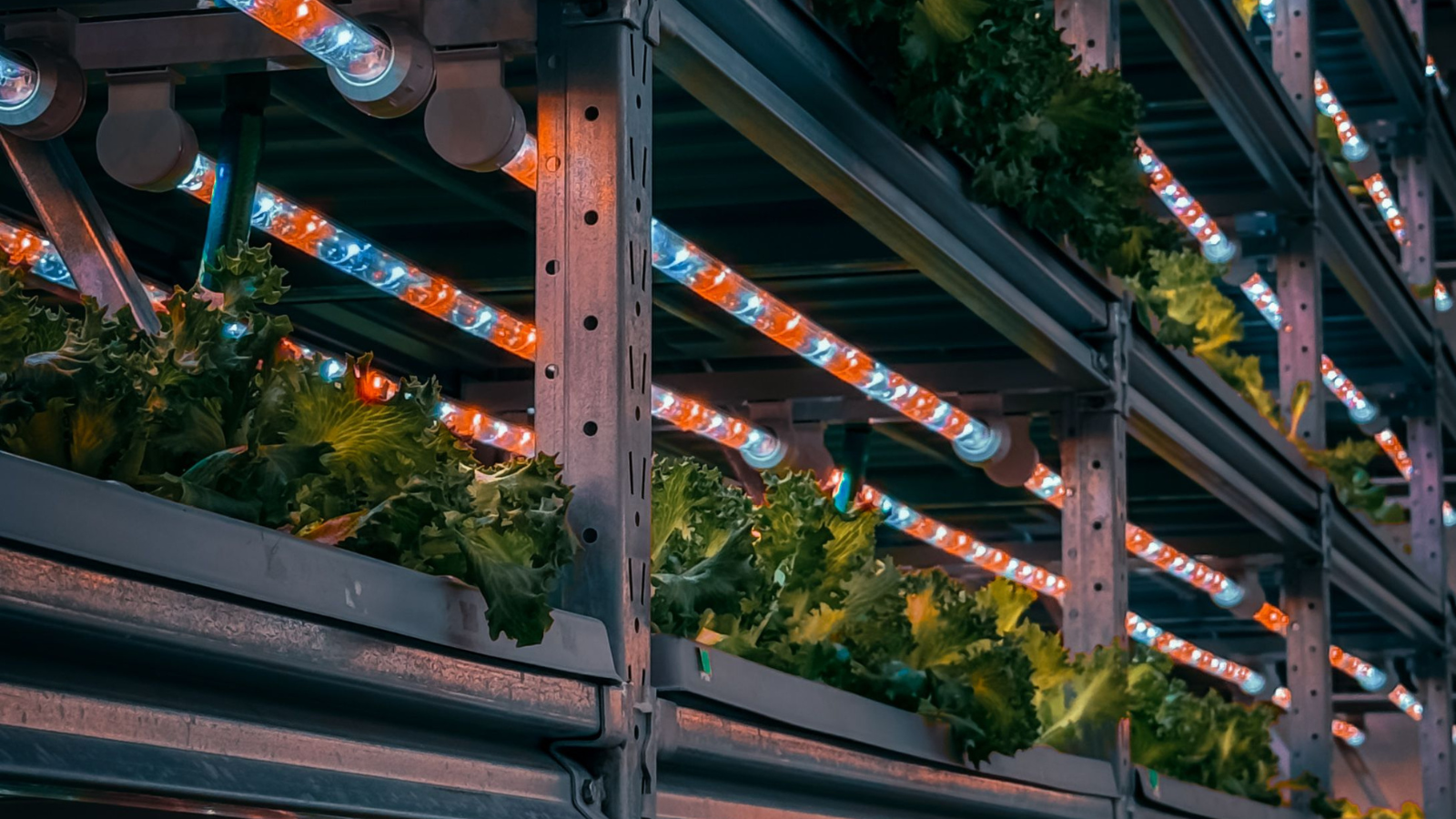
A light recipe is a set schedule of wavelength, intensity, and duration that a grower delivers to a crop at a specific growth stage. In other words, it's a plan. We choose one combination of light while a plant is building leaves, then switch to a different combination in the days right before harvest.
A lot of the flavor work happens during that second phase. Growers call it an end of production treatment. A plant that spends its whole life under one steady light setting behaves differently than one that receives a deliberate shift right before it's picked.
A few things define a usable light recipe:
We treat these four variables the way a chef treats heat, time, and seasoning. Adjust one, and the finished product changes, sometimes subtly and sometimes dramatically.
Plants can't run from a drought or duck out of a strong sun, so instead they build chemical defenses. Those defenses are the same compounds we taste as flavor, which is exactly why controlled stress is such a useful tool indoors.
Botanists call these compounds secondary metabolites, and three families matter most for flavor: terpenes, flavonoids, and glucosinolates. Terpenes carry aroma, the kind you notice in basil or mint. Flavonoids carry color and some of the tart, sharp notes in leafy greens. Glucosinolates carry heat, the peppery bite you get in mustard greens or arugula.
In an open field, a plant produces these compounds in response to whatever nature throws at it that season. Indoors, we apply a measured, repeatable version of that same stress on purpose. A short blue light spike, for example, mimics the kind of UV exposure a plant would face on a bright, high altitude day, and the plant responds by building more of the compounds that carry heat and color.
This is the core idea behind everything that follows. If flavor comes from a plant's defense response, and we control the environment, then we control the response. That's the entire premise of a light recipe.
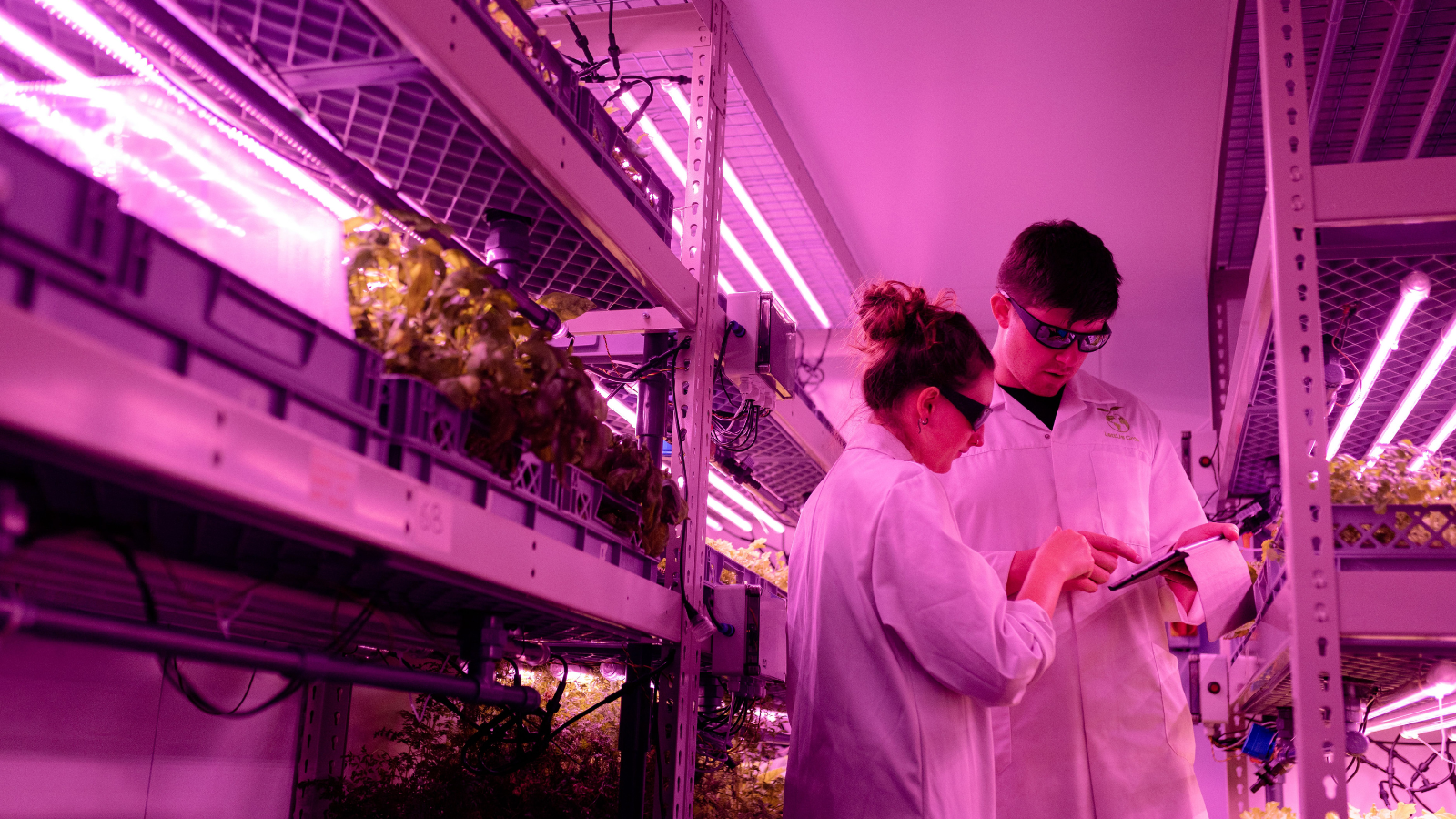
Different wavelengths trigger different defense pathways, so the flavor outcome depends heavily on which part of the spectrum a grower leans on. Here's how the main combinations map out in practice.
| Flavor Target | Light Adjustment | Compound Pathway | Result in the Crop |
|---|---|---|---|
| Spicy, peppery | Strong blue light with a short UV-B spike near harvest | Glucosinolates and phenolic compounds | Sharper bite in arugula, mustard greens, and radish microgreens |
| Sweet, mild | Extended red light, cooler nights before harvest | Sugar accumulation through photosynthesis | Sweeter butterhead lettuce, less bitterness in kale |
| Aromatic, fragrant | Blue light balanced with far-red | Essential oil and terpene synthesis | More pungent basil, stronger mint, richer lemon balm |
| Tart, vivid color | Blue light with added UV-B | Anthocyanin and flavonoid buildup | Deeper red vein sorrel, more vibrant purple basil |
A grower reading this table should notice a pattern. Blue and UV wavelengths trend toward heat, color, and aroma, while red wavelengths trend toward sweetness and mildness. Therefore, the recipe a grower picks depends entirely on what the buyer at the other end wants on their plate.
That video walks through how LED spectrum requirements actually work inside a vertical farm, which is worth watching if you want to see the hardware side of this table in motion.
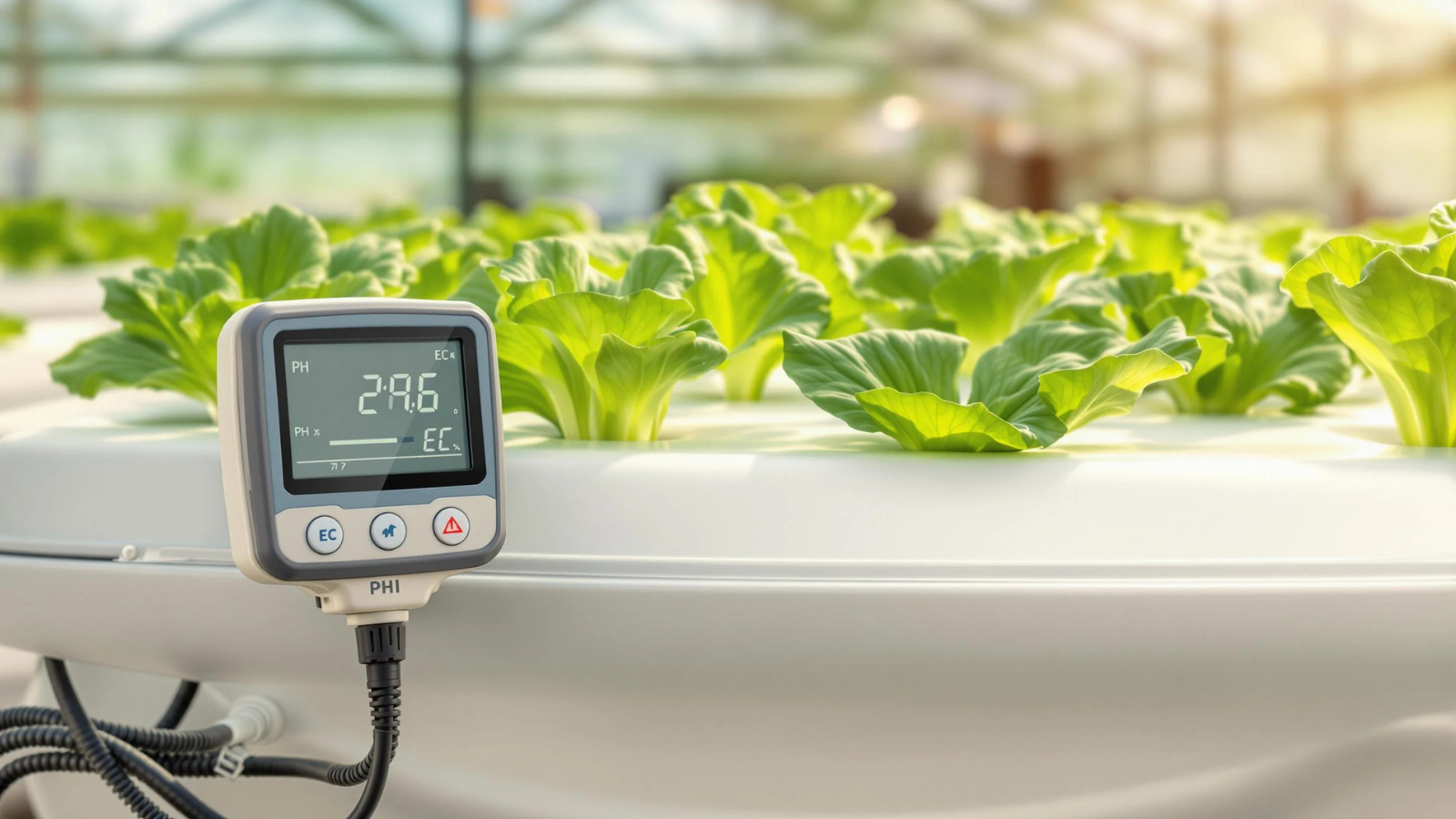
Light sets the direction, but nutrient tuning sharpens the result, and the two work together. Electrical conductivity, or EC, measures the concentration of dissolved nutrients in a hydroponic solution, and adjusting it changes how a plant handles water and sugar.
Raising EC slightly restricts how much water a plant can pull in. In turn, the plant concentrates the sugars and oils it already has, since it has less water to dilute them with. That's why a modest, well timed increase in EC right before harvest tends to make a crop taste more intense rather than more watery.
Nitrogen works the opposite direction. Lowering nitrogen in the days before harvest reduces nitrate buildup in the leaf, and nitrate is part of what reads as bitter or metallic on the tongue. If you cut it back at the right time, the plant tastes cleaner and sweeter.
Yes, and chefs are asking for this by name. Chefs and culinary buyers are already requesting specific, named flavor profiles rather than generic categories like "microgreens" or "sorrel."
Wasabi mustard greens are a clear example. A chef may not want a generic peppery green, rather a specific level of heat that mimics real wasabi root, which develops its heat from the sulfur and blue light combination we covered above. Red vein sorrel is another. Buyers ask for the tart, citrus-like bite alongside a deep red vein pattern, which comes from the anthocyanin pathway triggered by UV-B light.
This demand comes directly from a foodservice market that increasingly wants unique, repeatable ingredients rather than commodity produce, not from a lab exercise with no buyer behind it.
If you're evaluating indoor farming from the foodservice side, our indoor farming for food services page walks through how commercial kitchens are sourcing from systems like ours.
Independent research backs up what we see in commercial practice, and it's worth naming the sources directly rather than treating this as common knowledge.
Research from Philips Horticulture's GrowWise program shows that dynamic LED light recipes can shift volatile compound concentrations in basil and mint by 20 to 30%, without reducing yield. That range matters because it shows flavor and yield don't have to trade off against each other.
Separately, research associated with Wageningen University found that end of production light treatments, meaning high intensity blue or UV-B exposure applied three to five days before harvest, meaningfully raises anthocyanins, flavonoids, and essential oils without slowing the plant's structural growth.
A piece from Luxurious Magazine notes that adjusting light spectrum raises flavonoid levels in crops, which connects directly to more pronounced flavor and aroma.
And research summarized by IPP Farm explains that secondary metabolites, including flavonoids and phenolic acids, are produced by plants in response to environmental stimuli, and growers in controlled environment agriculture can trigger that production on purpose.
Commercial operators outside our own company, including names like Bowery, Plenty, and Nordic Harvest, run their own proprietary crop recipes that shift lighting, airflow, and nutrients across a growth cycle for exactly this reason. We're not naming them as partners, just as evidence that this approach is spreading across the industry, not staying confined to one farm.
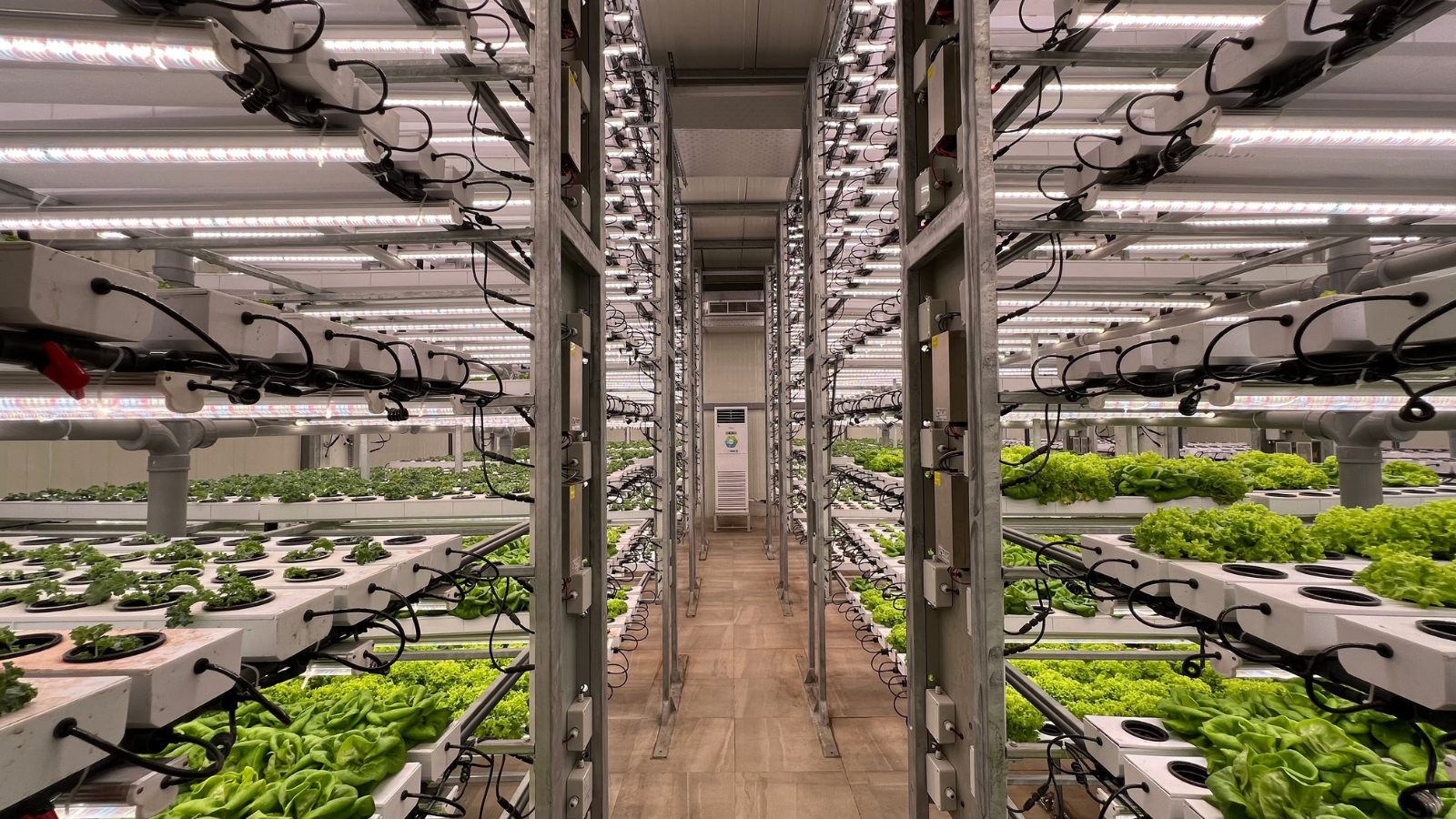
Our commercial systems are built with the flexibility this kind of flavor work requires, and that flexibility shows up in the numbers below.
What we can point to now is the scale this science runs across. Our systems support over 200 crop varieties, and that range only works because our lighting and nutrient systems are flexible enough to run a different recipe for each one. Our adaptive LED and climate automation, which cuts energy use 15 to 30% versus fixed spectrum setups, is the same hardware layer that makes switching between a red heavy recipe and a blue heavy recipe practical at commercial scale.
You can read more about how this technology works on our technology page.
That clip covers three concrete reasons dynamic LED lighting matters for a vertical farm, and it lines up closely with the flexibility we just described.
Flavor isn't an accident of soil and season anymore. It's a controllable output of light and nutrient science, and that's a shift in what indoor farming can promise a buyer.
Yield per square foot used to be the entire pitch for vertical farming. That number still matters, but it's no longer the only one worth tracking. Growers who master light recipes aren't only producing more food, they're producing better food, on demand, to a spec a buyer specifically requested.
We think that's the more interesting story here, and honestly, the more useful one for anyone deciding whether indoor growing fits their supply chain. If you can specify flavor the same way you specify size or shelf life, indoor farming stops competing with the field on volume alone and starts competing on precision as well.
Yes. Different wavelengths trigger different chemical pathways inside a plant. Blue and UV light tend to boost compounds tied to heat, color, and aroma, while red light tends to favor sugar buildup and mildness. Growers use spectrum as a flavor control as well as a growth tool.
A light recipe is a planned schedule of wavelength, intensity, and duration applied at specific growth stages, often shifting right before harvest. It lets a grower target a specific flavor outcome instead of leaving flavor up to whatever conditions happen to occur.
Nutrient tuning, especially electrical conductivity and nitrogen levels, plays a major role alongside light. Raising EC before harvest concentrates sugars and oils, while lowering nitrogen reduces bitterness. Light and nutrients work together, not separately.
Restaurants want consistency and differentiation. A custom profile, like a wasabi style mustard green or a sharply tart red vein sorrel, gives a kitchen an ingredient competitors can't easily source, at a flavor intensity that stays the same order after order.
No. The same spectrum and nutrient principles apply at smaller scales, though commercial systems with adaptive LED and automated dosing make it far easier to run several different recipes across multiple crops at once, rather than adjusting everything by hand.
Would you rather we reach out to you? Fill out the form to have a member of our team to reach out and discuss your growing goals.


